The Text Agent blog
Content Management Insights
Field-tested guides on AI-assisted writing, search visibility and running content across many sites.
29 articles10 topicsUpdated Mar 23, 2026

From Ideation to Impact: A Bulletproof Content Workflow
This report describes how B2B organizations can build a bulletproof, AI-enhanced content creation workflow that aligns the They Ask, You Answer philosophy with scalable tech and governance to reduce time-to-publish, centralize multi-site operations, improve ROI, and restore buyer trust in 2026.
Mar 23, 202616 min read
Also new

Analytics & SEO
Content ROI That Pays: Turn Articles into Predictable Revenue
Mar 16, 202614 min read

Analytics & SEO
Trust Over Volume: How Human + AI Content Wins in 2026
Mar 9, 202612 min read

AI Solutions
From Invisible to Indispensable: Make AI Find You
Feb 23, 202612 min read

Analytics & SEO
Content Wheel: How Hub-and-Spoke Supercharges Growth
Feb 20, 202616 min read
More articles
Showing 1–9 of 24 articles

AI Solutions+2
Use AI to Find and Fill Competitors' Content Gaps
This article explains how enterprises can use AI to identify and exploit competitors' content gaps by shifting from traditional SEO to Generative Engine Optimization (GEO), employing semantic analysis, sitemap extraction, and a human-in-the-loop production workflow to produce high-quality, multi-stakeholder content that drives measurable B2B ROI.
Feb 18, 202614 min read

AI Solutions+2
Content Command: How Governance Keeps Multi-Site Brands Cohesive
This guide explains how enterprise content governance transforms fragmented multi-site content operations into secure, scalable, revenue-driving systems by combining centralized architecture, fine-grained access control, structured content, automated workflows, brand guardrails, and a governed hybrid AI workflow designed for 2026's AI-driven search environment.
Feb 16, 202612 min read
Analytics & SEO+2
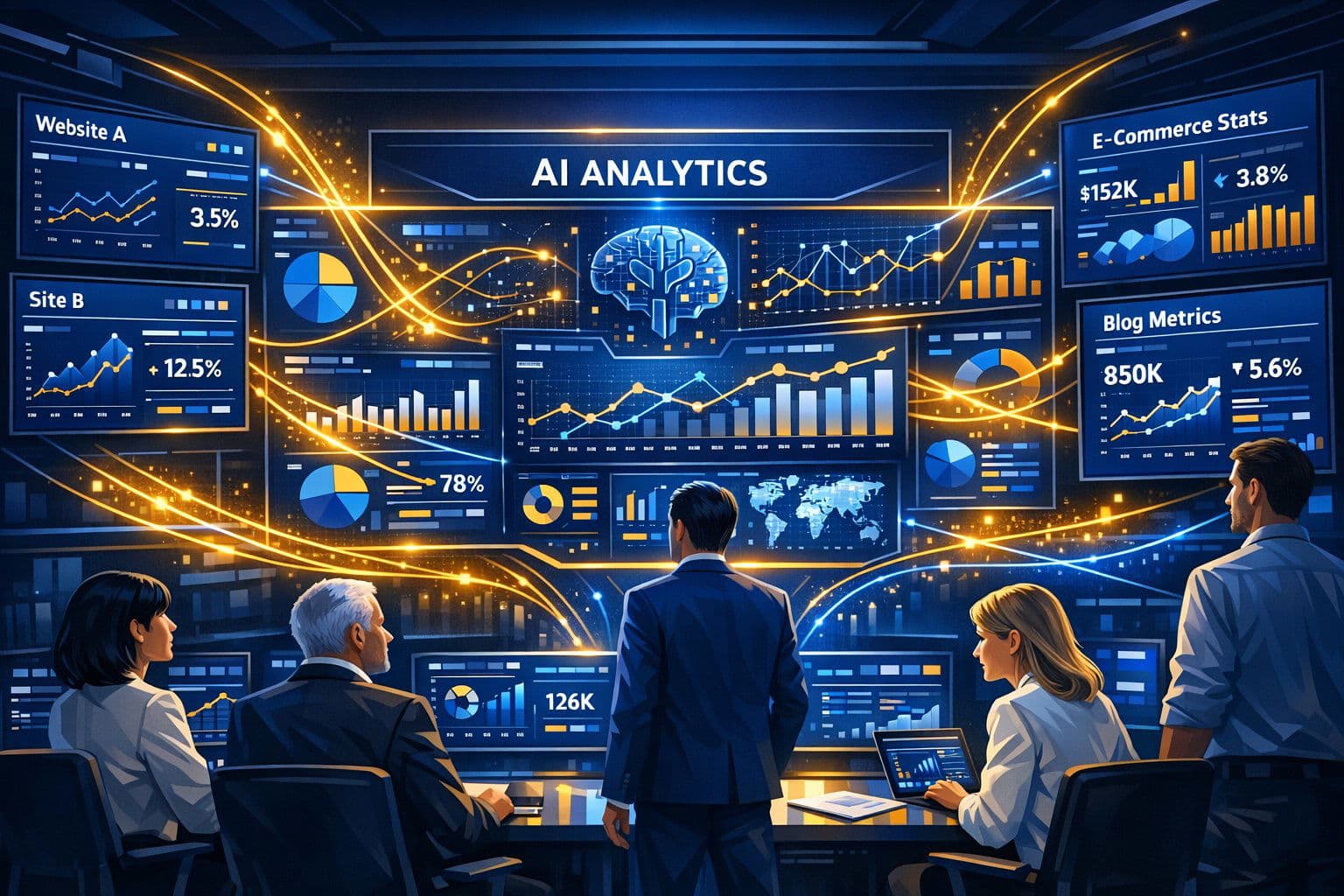
How Enterprises Turn Domain Chaos into Growth
This guide explains how large organizations can unify analytics across multiple domains to stop attribution blind spots, reduce operational friction, and measure true content ROI by implementing GA4 cross-domain tracking, aggregating GSC data into data warehouses, automating continuous auditing, and preparing for AI-driven search with Generative Engine Optimization (GEO).
Feb 13, 202616 min read

Analytics & SEO+2
From Blue Links to AI Citations: Mastering GSC for 2026
This guide reframes Google Search Console (GSC) for 2026 as a strategic, operational system for content managers: it explains AI-era metrics (AI Mode), clean-HTML practices for retrieval, Striking Distance workflows, multi-site API aggregation, Core Web Vitals priorities, and executive reporting tactics to turn GSC data into measurable revenue outcomes.
Feb 11, 202612 min read

AI Solutions+2
The Algorithmic Architect: How AI Automates On-Page SEO
This article outlines an AI-first methodology for automating on-page SEO—cleaning HTML, generating metadata, building semantic internal links, dynamic sitemaps, image generation and humanized editing—to help multi-site publishers and agencies scale SEO operations, improve citation rates, speed indexing, and free human teams to focus on strategy and brand voice.
Feb 9, 202615 min read

AI Solutions+2
Mastering AI Blog Automation: Boost Your Content Strategy Effortlessly
This article discusses the benefits, features, and implementation strategies of AI blog automation tools that streamline content creation, optimize SEO, and enhance audience engagement.
Nov 28, 20258 min read
AI Solutions+2
Unlock the Power of Automated Content Creation in 2025
This article provides a comprehensive executive guide on automated content creation, covering ROI, risks, workflows, SEO, governance, and strategic implementation.
Nov 7, 20257 min read
Content Strategy+2
Revolutionize Your Blogging with AI Power
This article provides comprehensive guidance on using AI blog post generators to create high-quality, SEO-friendly blog content efficiently, covering setup, customization, editing, benefits, challenges, and best practices.
Nov 7, 20258 min read

AI Solutions+2
Top 20 AI Tools for Marketing to Elevate Your Strategy in 2025
The article details the transformative role of AI tools in marketing in 2025, covering categories like content creation, SEO, social media, email, design, analytics, and automation, supported by relevant examples and future trends.
Oct 29, 202512 min read
Get new articles in your inbox
New posts on AI writing, search and multi-site publishing, straight to your inbox. Unsubscribe any time.